
1. The identity of synchronized skating
Many reactions first focus on the very definition of synchronized skating.
After reviewing the feedback, the points mentioned most often are:
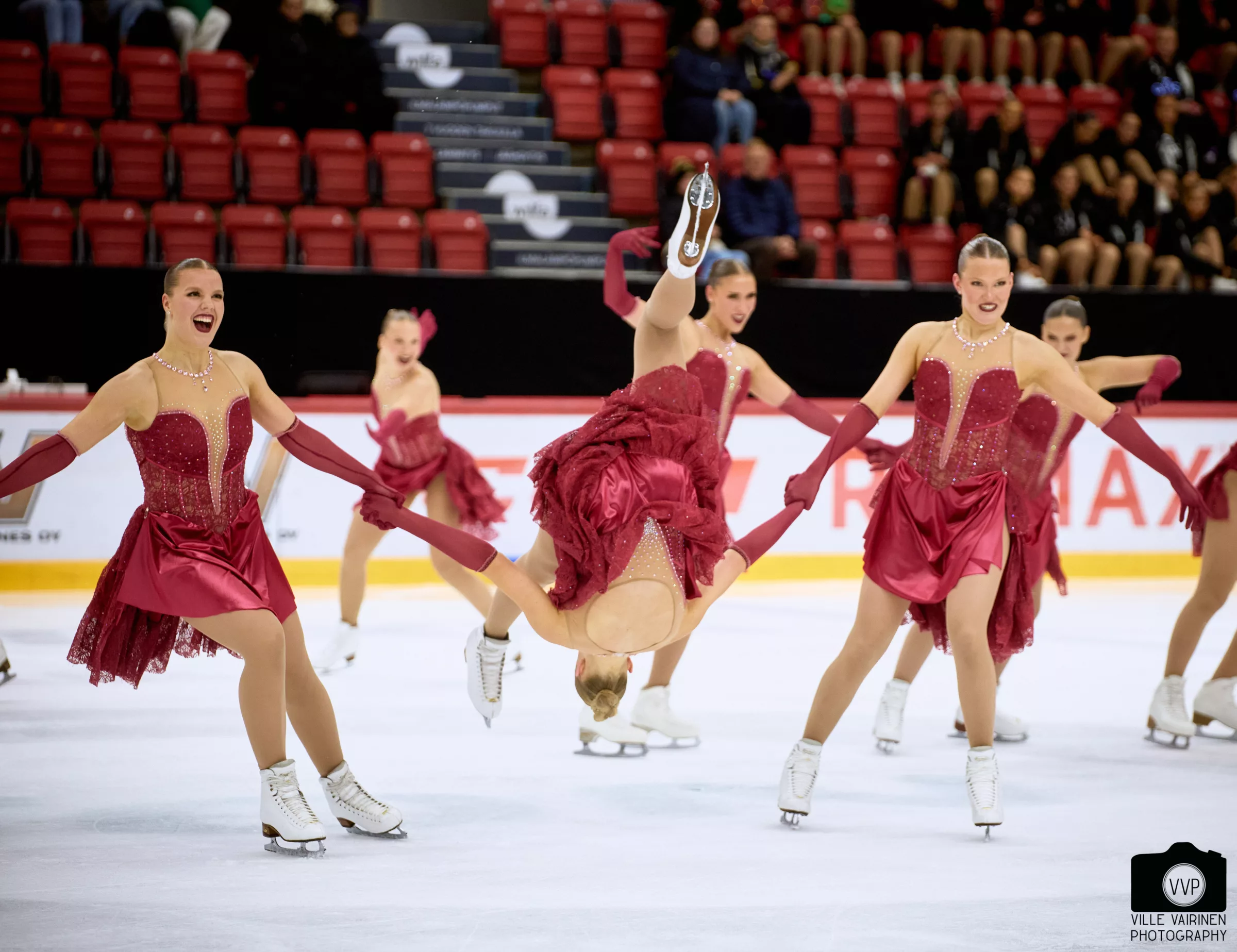
- synchronized skating is built on the strength of the collective,
- symmetry and the density of formations are seen as fundamental,
- with 9 skaters, some fans believe these elements will be profoundly altered.
For part of the community, Synchro 9 therefore appears as a shift away from the discipline as it is practiced and appreciated today.
 Ville Vairinen - 2025
2. A potentially reduced visual impact
The “spectacular” dimension is also at the heart of 16-skater (or 12-skater) synchronized skating, and this is another key point in the reactions.
Several observations highlight:
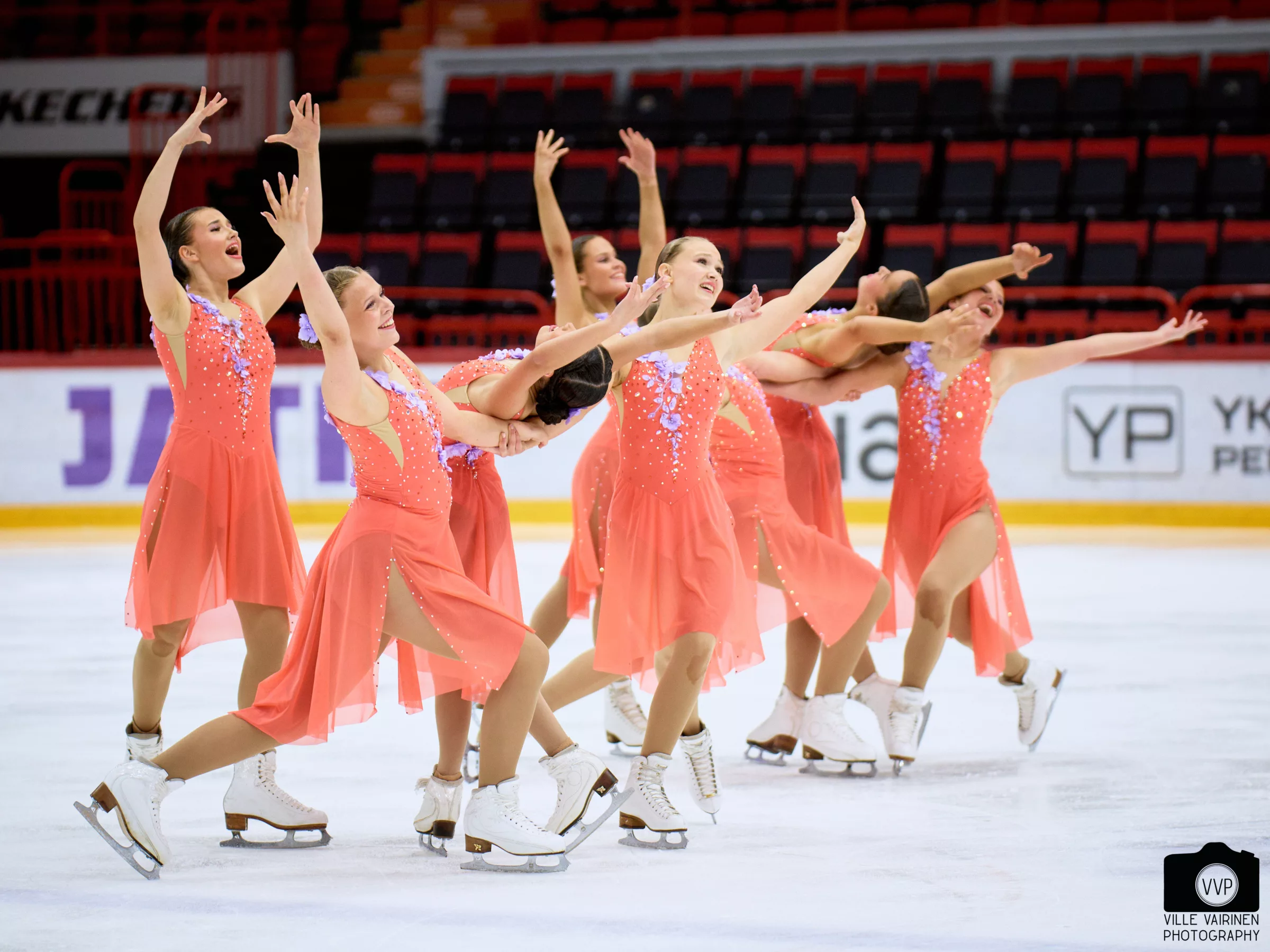
- a possible reduction in the “wow” effect of intersections,
- less impressive blocks and wheels,
- difficulty maintaining the same level of visual complexity.
The question is whether this format can preserve the magical, multi-dimensional effect that makes the discipline unique.
3. The choice of the number 9 widely questioned
The decision to go with 9 skaters has, on its own, sparked many reactions.
The same questions come up repeatedly:
- why an odd number in a discipline based on symmetry?
- why 9 rather than 8 or 10?
- what sporting logic guided this specific choice?
For many, this odd number raises questions and fuels confusion about the new format.
4. Elite 12, a frequently cited precedent
Reactions also frequently refer to “Elite 12”.
Several points are shared by fans:
- the category "never really found its place",
- it did not gain the expected support,
- it is seen as an unfinished attempt.
In this context, Synchro 9 is sometimes viewed as a continuation of that experiment, raising questions about its ability to establish itself over the long term.
5. Mixed expectations around accessibility and development
Finally, the argument of making the sport more accessible is widely debated.
Reactions point to:
- a possible increase in cost per skater with smaller teams,
- stronger selection within clubs,
- doubts about the format’s real impact on bringing in new countries.
While the desire to see the sport grow is widely shared, the means to achieve it are clearly being questioned.
 Ville Vairinen - 2025
Across these reactions, one message stands out clearly: synchronized skating fans around the world support the Olympic ambition, but are looking for assurances that the discipline’s identity, spectacular appeal and economic balance will be preserved.
Synchro 9 now appears as a major turning point, raising as many hopes as it does questions.
Now discover the answers to these questions in our interview with Philippe Maitrot (ISU).